
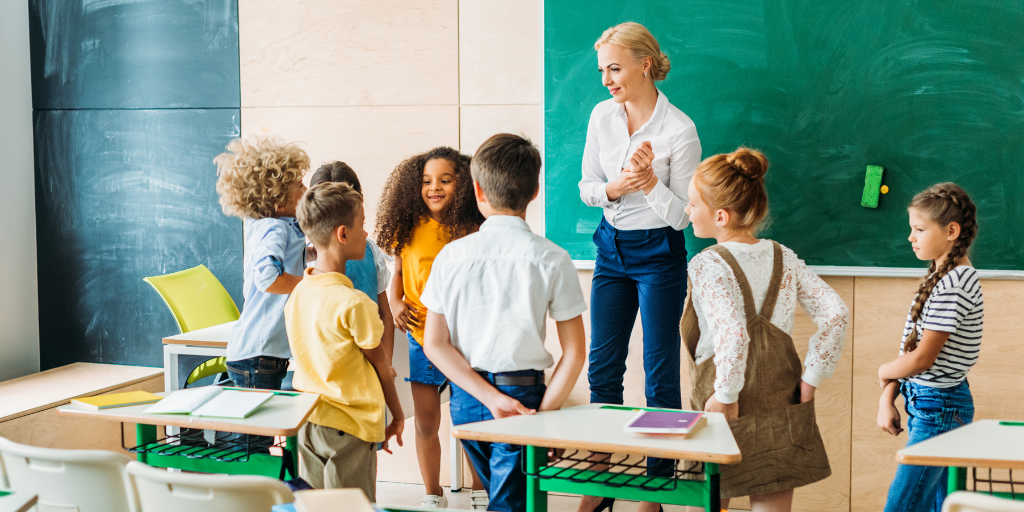
You don’t have to be a parent to care about each student in your charge. As teachers or school administrators, you understand just how much children will grow and learn under your guidance. It’s not just reading, writing, and arithmetic, either; school is where most of us learned a plethora of life lessons that we carried into adulthood, and that is undoubtedly how it’ll go for your students too.
That’s a lot of responsibility to have on your shoulders day after day. But, as more study and more effort is put into the idea of social and emotional development lessons, there are an increasing variety of lessons and tools to help you bring this theory of education into your classroom — including easy-to-use student assessment tools like Bloomsights. If you’re new to the social emotional development theory, here are the basics:
Understanding Social Emotional Development
Social emotional development is simply a term used to describe a child’s ability to understand and control their emotions/feelings and how they understand others’ feelings. Their social emotional learning is also the basis of how a child builds relationships with friends, parents, other adults, and so on. Basically, a child’s social emotional development is going to be the foundation for how they interact with the world around them. Given that and the fact that children spend so many hours each week at school, you can see how a child’s school experiences can play a major role in shaping and growing their social emotional development.
There is no denying that it’s important to focus on social emotional development, especially during the preschool and elementary years. So far, research suggests that social competence can have an impressively widespread impact on a child’s success in a variety of social and economic areas later in life. For example, “students who exhibit weaker social competency skills may be more likely to drop out of high school, abuse drugs and alcohol and need government assistance” where their more socially competent cohort is likely to not only avoid those situations, but also to meet more measures of success in adulthood, like earning a 4-year degree in early adulthood.
Implementing Social Emotional Learning
More and more research is suggesting the value of two particular steps in order to help children grow their social competency. First, social emotional development should be a primary focus starting when children are young — preschool-aged if possible, but at the very least during kindergarten and elementary education. Second, social emotional learning shouldn’t just happen at home and activities; children spend a good chunk of their days at school, in heavily social situations, so it’s important to bring those lessons into the classroom as much as possible.
With everything on teachers’ plates already, it can sound overwhelming to add yet another layer to your daily responsibilities. This is where Bloomsights steps in to help. Our easy-to-use student assessments help give you a clear picture about what’s going on with each student socially and emotionally. From there, you can use that information to shift your focus or make changes in the classroom to better support your students’ needs. Learn more by connecting with us by email at hello@bloomsights.com or phone 970.568.8981.





 Bloomsights
Leave a reply to The Classroom of Today and the Lasting Effects of the Pandemic – Bloomsights Cancel reply